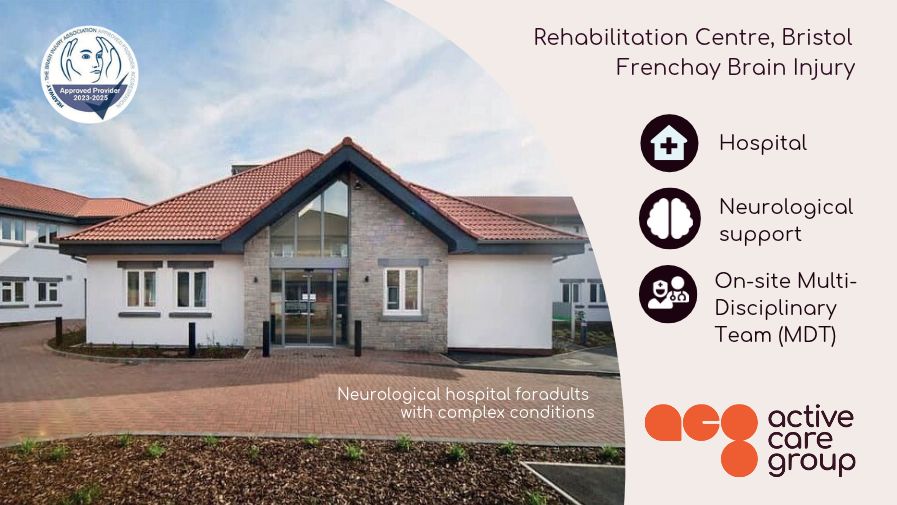
Recently, I had the pleasure of visiting Frenchay Brain Injury Rehabilitation Unit (BIRU) in Bristol, part of Active Care Group, where I met with Discharge Coordinator Aimee Wray.
Aimee kindly gave me a tour of this impressive 52-bed rehabilitation facility, which supports individuals recovering from acquired brain injuries. With specialist nursing teams, occupational therapy, physiotherapy, speech and language therapy, hydrotherapy and dedicated rehabilitation spaces, the focus is firmly on helping patients regain independence and achieve the best possible outcomes.
But what happens when rehabilitation comes to an end?
When the right care isn't available ...
During our conversation, Aimee shared some of the challenges involved in arranging safe and timely discharges, particularly for patients with complex clinical needs.
One example really stood out: a patient whose discharge was delayed by several weeks simply because a care provider with the necessary competencies to administer insulin could not be found.
It highlighted something we see all too often across health and social care: a patient may be ready to leave hospital, but the right support isn't always ready to receive them.
For individuals recovering from brain injury, the challenges can be even greater. Physical disabilities, cognitive changes, communication difficulties and behaviours of concern can all make returning home a complicated process, not only for the individual but for their family too.
Bridging the gap between hospital and home
At Bluebird Care South Gloucestershire, we believe that complex needs shouldn't automatically mean someone cannot return to the place they call home.
As a CQC Outstanding-rated, nurse-led care provider, we have the clinical oversight, training capabilities and experience to develop individualised care packages for people with complex and neurological conditions.
Our nursing team can provide specialist training and competency assessments, enabling our care professionals to support a range of delegated healthcare tasks alongside personal care, rehabilitation goals and everyday living.
Whether someone requires intensive, ongoing support or a smaller package to help rebuild confidence and independence, our approach begins with understanding the individual, their needs and what matters most to them.
Importantly, we recognise that successful complex care cannot be rushed. It requires careful planning, collaboration and the right people with the right skills.
Building stronger discharge pathways
My visit to Frenchay was a valuable opportunity to explore how we might work more closely with specialist rehabilitation services, discharge coordinators, social workers and case managers.
We also discussed the importance of longer-term community support, including organisations such as Headway, and the challenges families can face once formal rehabilitation has ended.
One message from our conversation stayed with me: the quality of care someone receives after leaving hospital is just as important as the rehabilitation that helped them get there.
Our ambition is to be involved in planning that transition from the outset, rather than being called upon only when an existing care package has broken down.
A huge thank you to Aimee for such a warm welcome, an insightful tour and a genuinely valuable conversation.
Are you supporting someone with complex neurological needs who is preparing to return home?
We would welcome an early conversation about how Bluebird Care South Gloucestershire could support a safe, person-centred transition from hospital to home.