Bluebird Care Watford and Three Rivers
The History of Home Care in the UK: A Newer Idea Than You Might Think
When a family starts looking into care at home for the first time, it can feel like stepping into unfamiliar territory. What's reassuring to know is that, in many ways, it is unfamiliar territory- not just for you, but for society as a whole. Professional, regulated home care as we know it today is a remarkably recent development. For most of British history, growing old or falling ill meant relying entirely on whoever happened to be nearby: a daughter, a neighbour, a parish official, or, if you were unlucky, no one at all.
Understanding where home care has come from helps explain why choosing it today can still feel like a big decision and why, at Bluebird Care Watford & Three Rivers, we see it as our job to walk alongside families as they work out whether it's the right path for them.
When care meant family, full stop
Before towns and cities grew large, most people lived their entire lives within the same small community. That closeness had a practical upside: everybody knew everybody, and when someone became too frail or unwell to manage alone, the people around them simply stepped in. It was rarely called "care", it was just what families and neighbours did.
Daughters, in particular, often carried this responsibility, since married women were less likely to be in paid work and were expected to look after ageing parents alongside their own households. There was no service to call, no qualification to check, and precious little medical knowledge to draw on. Life expectancy was short, and reaching old age at all was something of an achievement.
Superstition, servants, and a growing divide
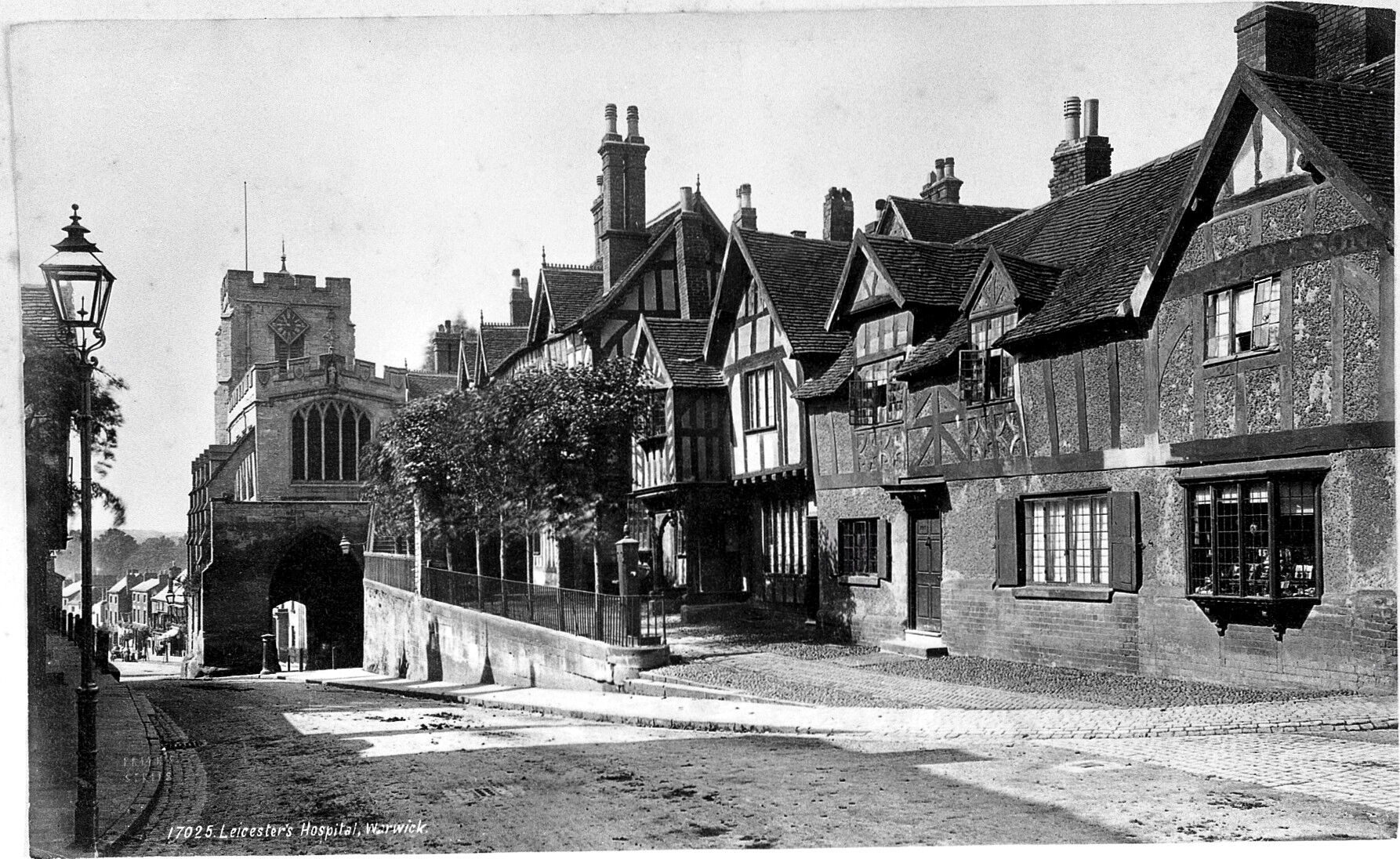
Through the medieval period, illness was poorly understood, and home-based treatment often amounted to little more than prayer or folk remedy. "Wise women" travelled between houses offering herbal cures passed down through generations- knowledge that, tragically, sometimes made them targets during periods of witch-hunting rather than being valued as it should have been.
Access to anything resembling organised care also came down to money. Wealthier households could bring in live-in servants to look after elderly or unwell relatives, or pay for a physician's home visit. For everyone else, support depended entirely on the goodwill of family, neighbours, or the local church. There was no fallback if none of those were available.
The state starts to take notice
A real turning point came in 1601, when the Poor Relief Act made each parish responsible for supporting residents who couldn't work due to age, illness or disability. Help came in one of two forms: being taken into a workhouse or almshouse, or receiving what was called "outdoor relief": food, fuel, clothing or a small allowance delivered to people in their own homes. In many ways, this was the first recognisable ancestor of home care in Britain: state-organised, if minimal, support that let people stay where they lived.
Charitable and religious organisations filled a huge amount of the gap that followed. Victorian Britain saw hundreds of charities spring up in London alone, many aimed at supporting the elderly, the sick, and the poor. It wasn't until 1929, with the Local Government Act, that local authorities were even permitted, not required, to provide care for older residents.
War, welfare, and the birth of "care in the community"
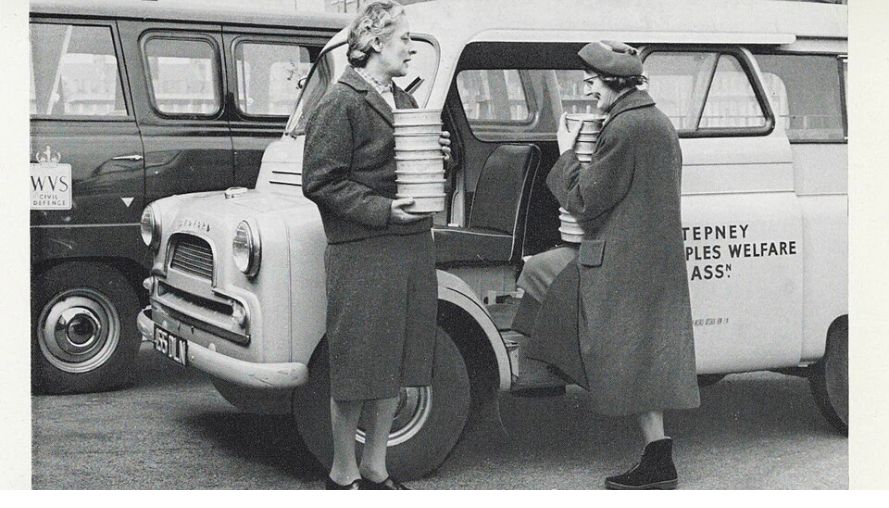
The Second World War reshaped attitudes to care in ways that still echo today. During the Blitz, the first Meals on Wheels services began, delivering food to people who'd lost their homes. Around the same time, Dr Marjory Warren was arguing forcefully that older patients, particularly those with dementia, needed specialist care rather than being placed on general hospital wards alongside completely different patient groups. Her campaigning led to the founding of the British Geriatrics Society in 1947.
Then, in 1948, the National Assistance Act made it a legal duty for local authorities to support people who couldn't afford care themselves. With little money available to rebuild hospitals or care homes after the war, community-based support grew out of necessity as much as principle, and councils began establishing day centres to help people remain independent at home for longer.
Building a legal framework for home care
It took until 1968 for home care to be formally written into legislation with real teeth. The Health Services and Public Health Act gave local authorities the power to send care workers into people's homes to help with everyday tasks like washing, cleaning and laundry and, crucially, to pay those workers for doing it. The introduction of Attendance Allowance in 1971 gave older and disabled people direct financial support to help them stay at home rather than move into residential care.
Two decades later, following a government-commissioned review by Sir Roy Griffiths, the 1990 NHS and Community Care Act cemented the principle that many of us now take for granted: that people should be supported to live independently at home wherever possible, with residential care as one option among several rather than the default.
From council service to modern industry
The 1990s and 2000s saw home care shift from being almost entirely council-run to a genuine, regulated industry with private and voluntary providers operating alongside local authorities. Regulation followed close behind: Care Inspectorate Wales was established in 2002, the Care Quality Commission in England in 2008 (following the Health and Social Care Act), and the Care Inspectorate in Scotland in 2011.
It's against this backdrop, a sector still finding its regulatory footing in the early 2000s, that Bluebird Care was founded in 2004, and our own Watford & Three Rivers/Chiltern & Dacorum team has been trading locally since 2010. When you consider that formal, professionally regulated home care has really only existed in something like its current form for twenty to thirty years, it puts into perspective just how new this whole way of thinking about later-life support still is, even though the need for it stretches back centuries.
Where we are today
Home care has continued to grow rapidly. According to Age UK, more than one in ten people over 65 in the UK now receive some form of formal help at home, rising to one in five among people aged 85 and over. The COVID-19 pandemic accelerated interest in live-in care specifically, as families sought ways to keep loved ones safely and comfortably at home rather than in communal settings and it also brought long-overdue attention to the value of the people who do this work.
Why this history matters to families today
Here's the thing about a sector this young: there's no generations-old rulebook families can lean on. Many of the people weighing up home care for a parent or partner today are the first in their family to ever navigate this decision- there's no inherited "this is how it's done," because for most of history, it simply wasn't done this way at all.
That's exactly why, at Bluebird Care Watford & Three Rivers/Chiltern & Dacorum, we don't just turn up and deliver a service, we see it as our role to help families work through the decision itself, at whatever pace they need. Whether that's talking through the difference between home care and residential care, explaining what a typical care visit actually looks like, or simply being a steady, knowledgeable voice while you figure out what's right for someone you love, we're here for the exploring as much as the doing.
If you'd like to talk through what home care could look like for your family, get in touch with our local team — we're always happy to answer questions, however early you are in the process.
References
- homecare.co.uk, "History of home care in the UK", updated November 2025. Available at: homecare.co.uk/advice/a-history-of-home-care — also the source of the Age UK statistic on the proportion of over-65s and over-85s receiving formal care at home.
- Wikipedia, "Home care in the United Kingdom". Available at: en.wikipedia.org/wiki/Home_care_in_the_United_Kingdom
- Wikipedia, "Care in the Community". Available at: en.wikipedia.org/wiki/Care_in_the_Community
- carehome.co.uk, "A history of care homes". Available at: carehome.co.uk/advice/a-history-of-care-homes
- Hygea Homecare, "The History Of Domiciliary Care In The UK". Available at: hygeahomecare.co.uk/the-history-of-domiciliary-care-in-the-uk
- The King's Fund, "Home care in England: Views from commissioners and providers", 2018. Available at: kingsfund.org.uk
- Navigator (The Health Foundation), "Health Services and Public Health Act 1968". Available at: navigator.health.org.uk
- Wikipedia, "National Assistance Act 1948". Available at: en.wikipedia.org/wiki/National_Assistance_Act_1948
- Wellcome Collection, "Leicester's Hospital, Warwick", photograph by F. Frith (Public Domain Mark). Credit: Leicester's Hospital, Warwick. Photograph by F. Frith. Wellcome Collection. Available at: wellcomecollection.org/works/a4mg2ent
- Wikimedia Commons, "File:Meals on wheels in Stepney Wellcome L0074581.jpg". Available at: commons.wikimedia.org/wiki/File:Meals_on_wheels_in_Stepney_Wellcome_L0074581.jpg

This article was independently written by the Bluebird Care Watford & Three Rivers/ Chiltern & Dacorum team, with the above sources used for historical fact-checking only.