

Aphasia is a term many people working in social care will have come across. At Bluebird Care Wandsworth, Putney & Battersea, it is something we see often in our day-to-day work, although it is still not always fully understood outside of healthcare settings.
What is aphasia?
Aphasia is a communication disorder caused by damage to the parts of the brain responsible for speech and language. It does not affect a person’s intelligence, but it can make speaking, understanding, reading, and writing more difficult.
In the past, aphasia was sometimes used to describe a complete loss of language, while less severe forms were referred to as dysphasia. Today, aphasia is used more broadly to describe a range of language difficulties.
The most common cause is stroke, particularly when it affects the left side of the brain. It can also occur after brain injury, brain tumours, or progressive neurological conditions such as dementia. While it can affect people of any age, it is more common in those over 65.
How aphasia can affect daily life
The way aphasia presents varies from person to person, depending on which areas of the brain are affected. Common challenges can include:
- Speaking clearly and forming sentences
Some people may speak in short, fragmented phrases, while others may speak fluently but struggle with word order or clarity. - Understanding spoken language
Conversations may become difficult to follow, particularly if speech is fast, complex, or contains long sentences. - Finding the right words
A person may struggle to recall familiar words, especially names of objects, people, or actions, leading to pauses or substitutions. - Reading difficulties
Some people may be unable to read at all, while others may recognise words but struggle to understand their meaning. - Writing and typing challenges
Forming written sentences or spelling words may become difficult, even if spoken understanding is relatively unaffected.
Aphasia is often described as expressive, receptive, or mixed/global, depending on which aspects of communication are affected. Because speech and language difficulties can vary so much, aphasia is sometimes mistaken for confusion or memory loss, which can be frustrating and isolating for the person experiencing it.
Managing communication in everyday life with a little help
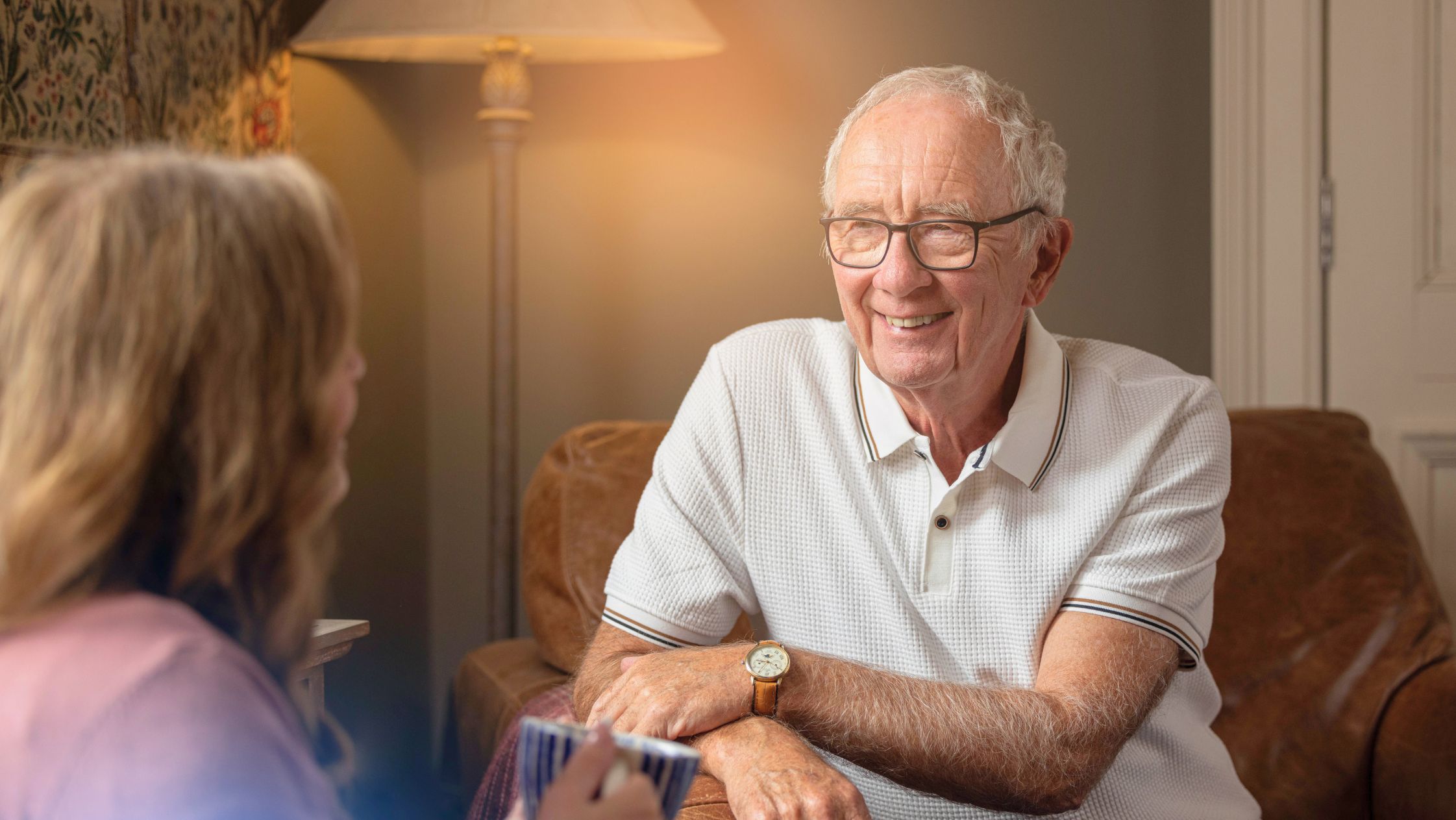
Speech and language therapy plays an important role in assessment and rehabilitation, and technology is increasingly used to assist communication.
Alongside professional input, simple everyday approaches can make a meaningful difference, including:
- Speaking slowly and using short, clear sentences
- Giving extra time for responses without interrupting
- Rephrasing questions instead of repeating them word for word
- Using writing, drawing, or notes to help explain ideas
- Using pictures, symbols, or communication cards where helpful
- Paying attention to facial expressions and body language
- Using simple gestures such as pointing or nodding
- Being open and honest when something is not understood
- Remaining patient, calm, and encouraging during conversations
These small adjustments can reduce frustration and make communication feel more natural and less pressured.
Person-centred care at home
At Bluebird Care Wandsworth, Putney & Battersea, we focus on care that is shaped around the individual, rather than a one-size-fits-all approach.
Our care assistants are trained to work with people living with communication difficulties, including aphasia linked to stroke, dementia, or other neurological conditions. We take time to learn how each person communicates best so they feel heard, respected, and involved in their daily life.
Clear, comfortable communication is a key part of maintaining dignity and quality of life.