The Early Signs of Dementia Every Family Should Know: Is It Normal Ageing or Dementia?
The Early Signs of Dementia Every Family Should Know: Is It Normal Ageing or Dementia?
As we get older, occasional forgetfulness is a normal part of life. We all misplace our keys, forget a name from time to time, or walk into a room and wonder why we went there in the first place.
But when memory problems begin to affect everyday life, many families start asking a difficult question:
Is This Simply Part of Growing Older, or Could It Be Dementia?
Every day, families across Torbay, Torquay, Paignton, Brixham and Totnes find themselves facing the same concern.
Recognising the difference between normal ageing and the early signs of dementia can help families seek the right support at the right time.
What Is Dementia?
Dementia is not a natural part of ageing. It is an umbrella term used to describe a range of conditions that affect the brain, including Alzheimer's disease, vascular dementia and several other types.
Dementia can affect:
- Memory
- Communication
- Problem-solving
- Behaviour
- The ability to carry out everyday tasks
Everyone's experience is different, and symptoms often develop gradually over time.
It's important to remember that occasional forgetfulness does not automatically mean someone has dementia.
What Is Considered Normal Ageing?
As we grow older, it's common to experience:
- Occasionally forgetting names or appointments but remembering them later
- Misplacing items from time to time
- Taking longer to learn new technology or routines
- Needing the occasional reminder about dates or events
Whilst these changes can be frustrating, they do not usually prevent someone from continuing to live independently and manage everyday life.
Early Signs That May Indicate Dementia
Symptoms can vary from person to person, but there are several common early warning signs that families often notice.
Memory Loss That Affects Daily Life
Forgetting important information repeatedly is often one of the first signs.
Examples may include:
- Frequently asking the same questions
- Forgetting recent conversations
- Missing appointments regularly
- Relying heavily on notes or family members to remember things
Difficulty Completing Familiar Tasks
Someone who has always managed daily routines confidently may begin to struggle with activities that were once second nature.
This could include:
- Following a familiar recipe
- Managing bills and finances
- Using household appliances
- Keeping track of medications
Problems Finding the Right Words
Many people living with dementia experience changes in communication.
They may:
- Pause frequently during conversations
- Struggle to find everyday words
- Lose track of what they were saying
- Repeat stories multiple times
Confusion About Time or Place
A person may become unsure about:
- The date or season
- Where they are
- How they got somewhere
- Their plans for the day
Changes in Mood or Personality
Families often notice emotional or behavioural changes before a diagnosis is made.
A loved one may become:
- More anxious
- Easily frustrated
- Less confident
- Withdrawn from social activities and hobbies
These changes can easily be mistaken for stress, loneliness or simply getting older, which is why they are sometimes overlooked.
When Should Families Seek Advice?
If memory problems or behavioural changes are becoming more frequent, it may be time to speak to a GP.
Early intervention can be incredibly valuable. A diagnosis can help individuals and families access support, information and practical strategies that enable people to continue living well for longer.
It's also important to remember that dementia is not the only cause of memory problems. Symptoms can sometimes be linked to:
- Stress
- Depression
- Medication side effects
- Vitamin deficiencies
- Other health conditions
The key is not to ignore changes that feel persistent or out of character.
Trust Your Instincts
Many families tell us they sensed something wasn't quite right long before seeking professional advice.
Perhaps Mum seems increasingly forgetful.
Maybe Dad is finding everyday tasks more confusing than before.
Or perhaps a partner who was once very social has started withdrawing from activities they previously enjoyed.
If something feels different, it's worth exploring.
Trusting your instincts and having an early conversation with a healthcare professional can make a significant difference.
You're Not Alone
If you're worried about a loved one, you're not alone.
Every day, families across Torbay and the surrounding areas face the same questions and uncertainties. It can feel overwhelming, but support is available.
At Bluebird Care Torbay & Totnes, we support families at every stage of the dementia journey. Our aim is not just to provide outstanding home care, but also reassurance, guidance and practical support when it's needed most.
Whether you're looking for advice following a new diagnosis, exploring dementia care at home, or simply seeking someone to talk to, our team is here to help.
Speak to Our Dementia Care Team
If you're concerned about the early signs of dementia in a loved one, we're here to help.
Our experienced team can offer guidance, answer your questions and support you in understanding the options available.
Contact Bluebird Care Torbay & Totnes today to find out how we can support you and your family.
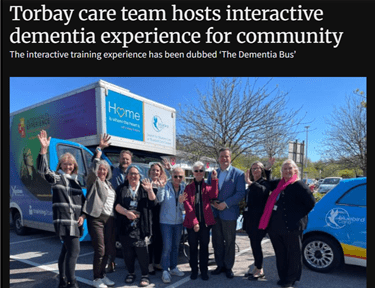
Join Our Dementia Experience Bus
If you'd like to gain a better understanding of dementia and the challenges people living with the condition may face, we invite you to attend our Dementia Experience Bus. This year its being held in The Willows by DFS September 29th 2026 and in Morrisons car park Totnes September 30th 2026. Call us to book your place, join us to learn and hopefully feel supported in what you are going through – you are not alone.
This immersive experience helps participants see the world through a different perspective and can provide valuable insight for families, carers, professionals and members of the community.
Call us on 01803 215999 and speak to one of our lovely team who really know what it is you are living through and can help guide you.