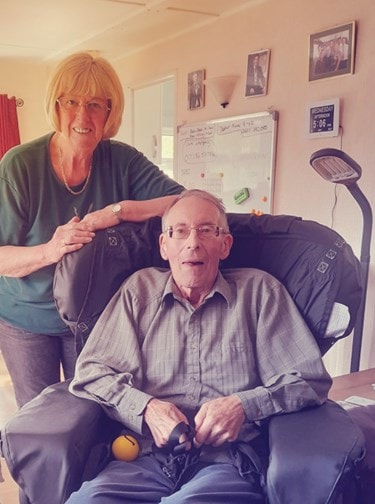
Starting the day by finding hidden objects
For Colin, the day often begins with around 30 minutes spent looking for objects that Pauline has hidden around the house.
This can include everyday items being placed in unexpected locations. On one occasion, Pauline’s uneaten dinner from the previous evening was found in the freezer. Cups have been placed in the cat’s bed, and the cat’s bed has even been found in the wardrobe.
Although these moments may sound unusual to someone unfamiliar with dementia, changes in behaviour and difficulties understanding how objects should be used or where they belong can be symptoms of Alzheimer’s disease. For the person living with dementia, the actions may feel completely logical at the time.
For carers, however, these situations can create additional practical challenges and make everyday routines more difficult to manage.
Keeping routines simple
Colin’s advice to other carers is to simplify daily life wherever possible.
Keeping routines consistent and straightforward can make tasks easier to manage, while reducing the number of objects that can be moved, misplaced or hidden may help prevent some of the challenges he experiences each morning.
There is no single approach that works for every person living with dementia. However, creating a familiar environment, keeping essential items in predictable places and avoiding unnecessary clutter can help make the home feel more manageable.
The aim is not to restrict someone’s independence, but to create surroundings that are easier to navigate and less confusing.
Understanding changes in behaviour
Colin also explains that Pauline is happy for much of the time. However, certain triggers can cause her to become aggressive or distressed.
One of these triggers is someone mentioning Alzheimer’s disease. Colin describes how this can lead to a significant change in Pauline’s behaviour, despite her generally being content.
Changes in mood and behaviour can be difficult for both the person living with dementia and those caring for them. Aggression may be linked to confusion, fear, frustration, communication difficulties or a situation that feels threatening. It is important to remember that these reactions are symptoms of the condition, rather than a reflection of the person’s character.
Understanding potential triggers can help carers respond with greater patience and compassion. Where possible, avoiding situations that cause distress, offering reassurance and allowing the person time and space can make a difference.
The importance of respite care
Caring for someone around the clock can leave little opportunity for the carer to rest. Colin explains how important it is to have regular support from Bluebird Care.
A few times a week, Bluebird Care carers visit and take Pauline out for coffee for around four hours. These outings give Pauline the opportunity to leave the house, enjoy a change of scenery and spend time with someone else.
They also give Colin something equally important: time to himself.
During those four hours, Colin can rest, recover and take a break from the responsibilities of being a full-time carer. This time is vital for his own physical and mental wellbeing, helping him recharge so that he can continue supporting Pauline.
Respite care is not about stepping away from responsibility. It is about making sure carers receive the support they need, too.
Supporting the whole family
Alzheimer’s disease affects more than the person who receives the diagnosis. It can change family relationships, daily routines and the responsibilities carried by those closest to them.
Colin’s story highlights the importance of practical support, understanding and regular opportunities to rest. It also shows how small changes to the home environment and daily routine can help carers manage some of the challenges associated with dementia.
At Bluebird Care Taunton & Mid Devon, we understand that every person and every family has different needs. Through companionship, care and respite support, our team helps people living with dementia remain connected to their communities while giving family carers time to look after their own wellbeing.
To watch the latest video in our Living with Alzheimers series, follow Bluebird Care Taunton & Mid Devon on social media.