
It is easy for a care provider to say its staff are trained in dementia care. What matters is what that training changes for the person receiving it, and for the family watching from the sidelines, often anxious about whether their loved one is really being understood.
Across Sunderland and Durham North, every carer on our team is trained to read dementia communication properly: the actions, sounds and body language that carry meaning once speech becomes harder to rely on. In practice, this changes the shape of a visit.
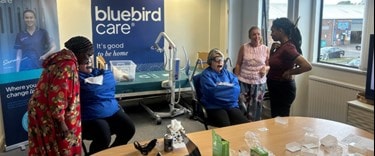
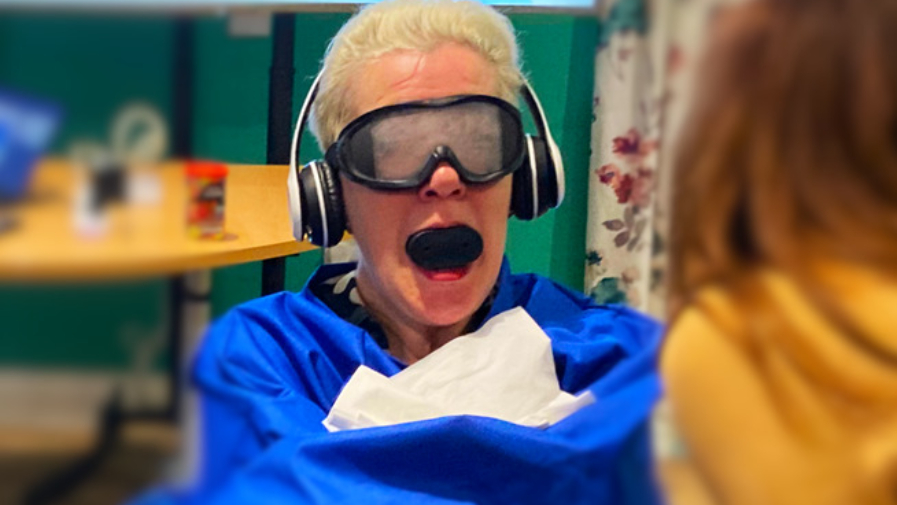
The training itself is immersive and in depth. Carers do not simply learn facts about dementia, they go through simulated exercises that recreate the confusion, frustration and sensory disruption it can cause, from blurred vision and muffled hearing to the physical difficulty of everyday tasks. Experiencing even a fraction of that firsthand is what allows our team to respond with genuine understanding rather than guesswork. The training is delivered in house by Michelle Dodds, our dementia interpreter lead who holds a level 4 qualification, alongside Amie Lockey, who holds a level 3 qualification, so it comes from real experience within our own team rather than an outside trainer with no connection to our customers.
Personal care becomes less distressing, because a carer who recognises fear or discomfort in a customer's body language can slow down or change approach before things escalate. Mealtimes go more smoothly, because refusal is understood as communication rather than defiance, and the real cause, be it pain, fatigue or something else entirely, gets addressed instead of overridden. Agitation in the evening is recognised for what it often is, rather than simply managed until it passes.
Customers experience fewer moments of frustration and more moments of being met with patience and accuracy. Over time, families notice this too: a parent or partner who seems calmer after visits, who cooperates more readily with care, who seems, in whatever way still available to them, more at ease.
For families and professionals weighing up care options in Sunderland and Durham North, this is the outcome worth asking providers about directly. Not whether staff have completed dementia training, most will say yes, but what that training actually changes when a carer is standing in front of your loved one on a difficult day.
If you would like to know more about how we support people living with dementia in Sunderland and Durham North, please get in touch.
.jpg?language=en "Dementia Interpreter")