

For years, I helped other families arrange care. As Director of Bluebird Care South Gloucestershire, I understood the questions, the decisions and the responsibility of finding the right support for someone at home.
Then my dad suffered a severe stroke, and I found myself on the other side of those conversations.
I still had all my professional knowledge. But I was also a daughter, worried about her dad and trying to understand what life would look like for our family.
Four years on, that experience continues to shape how I think about live-in care at home. It has deepened my appreciation of our carers, changed how I listen to families and reminded me how much the ordinary moments matter.
Knowing about care doesn’t prepare you for everything
Dad’s stroke changed life for all of us. After a lengthy hospital stay, he was eventually able to return home. Getting to that point meant facing a future none of us had expected.
Professionally, I knew the terminology and processes. I understood assessments and care plans, and I knew what good support should look like. Yet when it was my own dad in a hospital bed, knowing those things did not take away the uncertainty.
We wanted to make the right decisions for him while coming to terms with how much had changed.
That stayed with me. If I could feel overwhelmed with years of experience behind me, how might it feel for a family encountering care for the first time?
It made me more aware of how much people bring to that first phone call. Behind a question about care options or costs, there may be worry, exhaustion and a need for someone to explain where to begin.
Why coming home mattered so much
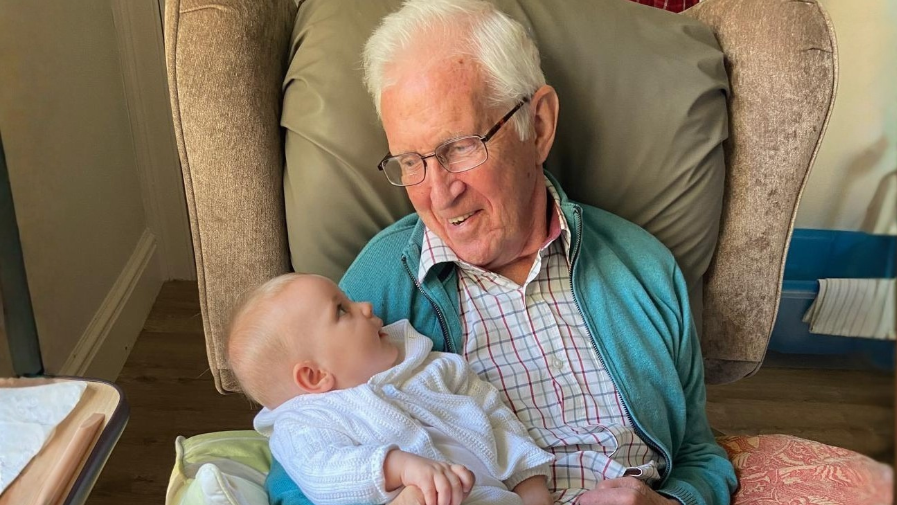
For our family, home meant Dad being with his wife, with his dogs nearby and familiar things around him. It meant his children could visit and his grandchildren could spend time with their grandad in the place they had always known him.
Those things were central to what we wanted for him.
Following such a major change, we wanted Dad to remain part of family life. We wanted him to have support in the surroundings that held our memories, with the people who knew him best close by.
Live-in care from our own Bluebird Care team helped make that possible.
I had spoken to many families about the value of remaining at home. Experiencing it myself gave those conversations a different weight. Home had always mattered to us, but after Dad’s stroke, I understood more deeply what it meant to be able to stay there.
What live-in care looks like within a family
Live-in care involves a carer living in someone’s home to provide agreed support with everyday life. The care is planned around their needs, routines and preferences.
For our family, the importance of that arrangement went well beyond practical help.
It meant family life could continue around Dad. His grandchildren could come through the door and spend time with their grandfather at home. His wife could be there with him. His dogs were still part of his surroundings.
Life looked different after his stroke, but those connections remained.
When you are discussing care, it is easy to concentrate on everything that needs to be organised. Those practical details matter enormously. But living through it reminded me to ask another question: what is this support helping someone keep in their life?
For Dad, and for us, the answer was being together at home.
Seeing our carers through a daughter’s eyes
I have always valued our carers. Seeing them support my own dad gave me a new understanding of the trust families place in them.
Inviting someone into your home is personal. You are welcoming them into an established household, with its own relationships, habits and ways of doing things.
A good live-in carer takes time to understand that. They learn someone’s preferences, notice the little things and find their place within the rhythm of the home.
There is judgement involved in knowing when to offer help and when to leave room for independence. There is sensitivity in recognising when someone needs reassurance, conversation or simply the space to do something in their own way.
As a director, I had always understood why these qualities mattered. As a daughter, I felt their importance. I saw how much it meant for a carer to get to know Dad as an individual, and to understand that they were supporting a whole household too.
The support families don’t always see
My experience also gave me a greater appreciation of our managers and the work behind each care arrangement.
Families naturally focus on the carer coming into the home. Behind that relationship is a team working to find a suitable match, support the carer, respond to changing circumstances and keep communication open.
Having someone to speak to matters. So does feeling that a concern will be heard and that you can ask a question without needing to know the right terminology.
When circumstances are unfamiliar, a clear explanation can make the next decision feel more manageable. Experiencing care within my own family reinforced how important it is that we give people that time and attention.
What I now bring to conversations about care
When a family contacts us about live-in care in South Gloucestershire, I bring my professional experience to the conversation. But I also remember being a daughter wondering what would happen next.
I know that understanding how a service works is only part of what someone needs. They also need us to listen to what matters to their family, explain the options clearly and take their concerns seriously.
Sometimes, people need time to work through their questions. Sometimes, they need reassurance that they do not have to understand everything before making that first call.
Dad’s experience reminded me that our role begins with listening. Before we can talk about the right support, we need to understand the life someone wants that support to protect.
Four years on, it is still about Dad being home
What stays with me most is that Dad has been able to remain at home with his wife, his dogs and his family around him.
His grandchildren can spend time with their grandad in familiar surroundings. We can continue to share ordinary family moments, even though life has changed.
That is what live-in care has meant to us. And it is the experience I carry into the way we support other families at Bluebird Care South Gloucestershire.
I still see care through the eyes of someone who has spent years working in this profession. But alongside that is a much more personal understanding of why the right support at home can matter so much to a family.
Get in touch
If you are exploring care for someone in your family, you do not need to have every answer before speaking to us. We can start with what matters to you and talk through whether live-in care at home could be suitable. Call our team on 01454 323 624.