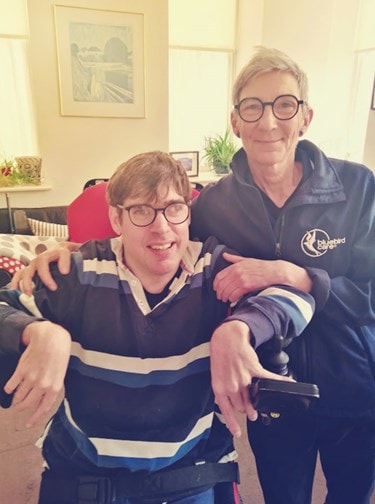
Acquired Brain Injury Care in Highgate & Haringey
Expert care for acquired brain injury. In the comfort of home
Life after an acquired brain injury can involve relearning familiar skills, adapting everyday routines and finding new ways to do things that once felt automatic. The right support can help you or your loved one move forward at a pace that feels manageable.
Bluebird Care provides acquired brain injury care across Highgate, Haringey and surrounding neighbourhoods, including Muswell Hill, Stroud Green and West Green. Our care experts provide personalised support based around each customer’s abilities, challenges and goals.
Whether someone is working towards greater independence, adjusting to changes in memory or movement or simply needs more help with everyday life, care can be shaped around what matters most to them.
What is an acquired brain injury?
An acquired brain injury, often shortened to ABI, is an injury to the brain that happens after birth.
It can have many causes, including a fall, road traffic accident, sports injury, stroke, tumour, infection or haemorrhage.
The effects vary considerably depending on the nature and severity of the injury. Someone may experience physical changes, while another person may be more affected by memory, concentration, communication or emotions.
Possible effects can include:
- Problems with balance or coordination
- Difficulty concentrating
- Memory changes
- Headaches
- Changes in mood or behaviour
- Difficulty communicating
- Sensitivity to light or sound
- Changes in movement
- Fatigue
- Reduced confidence
These challenges can also change over time, so support should be based on how the injury affects the individual now rather than making assumptions from their diagnosis alone.
Adjusting to everyday life after a brain injury
An ABI can change parts of life that previously required very little thought.
Someone may need to relearn how to complete particular tasks, use different strategies to remember appointments or allow much more time for activities that were once straightforward.
This adjustment can affect the whole household too.
Family members may suddenly find themselves providing more help, while the person who experienced the injury may be trying to come to terms with changes to their abilities and independence.
Having professional support available can provide greater structure while giving the customer opportunities to practise skills, make choices and remain actively involved in their own life.
Supporting rehabilitation and reablement
Recovery from an acquired brain injury can continue long after someone leaves hospital or formal rehabilitation.
Bluebird Care Highgate & Haringey supports customers with reablement, helping them practise or relearn everyday skills and work towards greater independence.
This could involve tasks as fundamental as walking, talking or recognising people and objects, depending on how the injury has affected the customer.
A care expert can provide encouragement and practical support as the customer works towards goals that are meaningful to them.
This does not replace specialist rehabilitation. Instead, everyday care can help reinforce the skills and routines the customer is working on in the environment where they actually live.
What can acquired brain injury care include?
Support will depend on how the injury affects the customer and what has been agreed within their personalised care plan.
This may include:
- Personal care: Respectful help with washing, bathing, dressing, grooming and other personal routines.
- Relearning everyday skills: Patient support as the customer practises abilities that have become more difficult following their injury.
- Medication support: Assistance maintaining agreed medication and prescription routines.
- Meals and nutrition: Preparing healthy, enjoyable meals and helping maintain regular eating and drinking routines.
- Household support: Assistance with cleaning, laundry, shopping and other everyday responsibilities.
- Community involvement: Encouragement and practical help to get out, see other people and become more confident in the local community.
- Companionship: Conversation, emotional reassurance and a familiar person to spend time with.
- Respite for relatives: Professional support that allows family members who regularly provide care to take time away.
The balance of support can change as the customer develops new skills or their circumstances evolve.
Creating structure without taking over
Memory or concentration difficulties can make an ordinary day harder to organise.
Someone might forget what they planned to do, lose track halfway through a task or become overwhelmed when too much is happening at once.
Consistent routines can sometimes make daily life easier to navigate.
A care expert can provide calm prompts and break everyday activities into manageable steps where helpful, while still giving the customer time to complete the things they can do themselves.
The aim is not to control their day. It is to provide enough structure and encouragement for the person to remain involved and make choices about how they spend their time.
Rebuilding confidence outside the home
An acquired brain injury can affect someone’s confidence as much as their practical abilities.
Activities such as shopping, meeting friends or travelling to an appointment may suddenly feel more demanding.
Bluebird Care includes community involvement as part of its acquired brain injury support, helping customers gradually reconnect with everyday life.
For one person, that could mean having someone alongside while going for a local walk. For another, it may involve returning to a hobby, seeing friends or becoming more comfortable in busy environments again.
Progress can be gradual, and what feels like a small achievement to someone else may represent a significant step for the customer.
Emotional support for customers and families
Changes following a brain injury can be difficult to process.
The person may feel frustrated, anxious or less confident than before, particularly if the injury has affected their independence or the way they communicate.
Relatives can also experience significant change as they adapt to new responsibilities and a different family dynamic.
A familiar care expert can provide companionship and a listening ear alongside practical assistance.
Professional care can also give relatives time away from caring responsibilities, allowing them to rest, work or spend time with the customer as a family member rather than always being responsible for their support.
Care that can develop with the customer
There is no fixed timetable for life after an acquired brain injury.
Some abilities may improve significantly, while other changes can remain longer term. The support that is useful in the early stages may therefore look very different several months later.
Our Highgate & Haringey team can review the customer’s care as their abilities, confidence and priorities change.
Where someone becomes more independent, support can focus on different goals or reduce where it is no longer needed. If new difficulties emerge, the care plan can be adapted around them.
The customer remains at the centre of those decisions throughout.
Getting started with acquired brain injury care in Highgate & Haringey
If you or a loved one is adjusting to life after an acquired brain injury, our Highgate & Haringey team can help you explore the support available at home.
We will take the time to understand how the injury currently affects everyday life, what the customer wants to work towards and where additional assistance would be most valuable.
Bluebird Care provides acquired brain injury care throughout Highgate and Haringey, including Muswell Hill, Stroud Green and West Green.
Call Bluebird Care Highgate & Haringey on 0208 154 5578 for a friendly, no-obligation conversation about acquired brain injury care.
See care services in Highgate & Haringey
East Midlands
East of England
Greater London
North East
North West
Northern Ireland
Scotland
South East
South West
Wales
West Midlands
Yorkshire and the Humber
East Midlands
East of England
Greater London
North East
North West
Northern Ireland
Scotland
South East
South West
Wales
West Midlands
Yorkshire and the Humber
Acquired Brain Injury Care in Highgate & Haringey stories
We have helped thousands of people feel like themselves
Hear how Bluebird Care has empowered customers across the UK to live life on their terms.