
Know what to look for, what to ask & how to compare
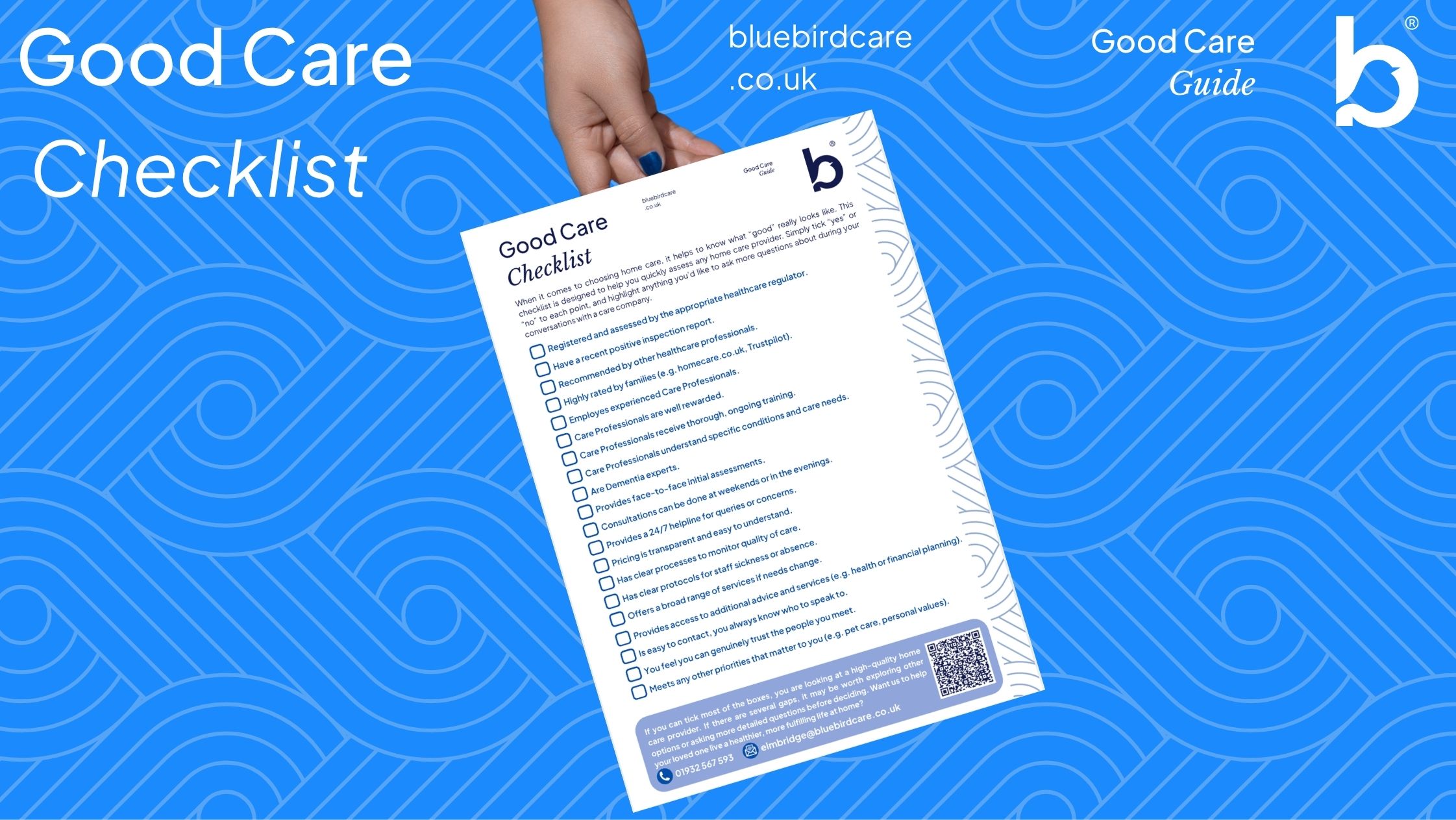
Good Care Checklist: 20 crucial questions from Bluebird Care Elmbridge, Runnymede & Spelthorne
Choosing and planning for care can feel overwhelming, especially if you’re unsure what good care should look like. Our Good Care Checklist helps families in Elmbridge, Runnymede & Spelthorne understand the key questions that reveal quality, safety, and reliability, so you can make informed decisions with confidence.

The earlier families start talking about care, the more choice and confidence they have.
– Si King, Bluebird Care Ambassador for Dementia Awareness
Get your free Good Care Checklist
A free printable checklist to help your family quickly spot red flags, compare providers, and feel confident you are choosing safe, high quality care in Elmbridge, Runnymede & Spelthorne. Take the first step towards confident care decisions. This practical checklist helps you ask the right questions, compare providers clearly, and understand what good home care should look like before making an important decision.
Download the free checklist
.jpg?language=en "Good Care Checklist")
What this checklist helps you spot
Inside the 20 questions, you will be able to check:
- If a provider is properly regulated and has a recent positive inspection report.
- How they recruit, train and reward their Care Professionals.
- How well they understand dementia and other specific conditions.
- How they handle emergencies, sickness and continuity of care.
- How easy it is to contact someone you trust when something feels wrong.

Why planning ahead makes all the difference
Good care planning isn’t just about choosing a provider. It’s about understanding your options, protecting independence, and making decisions calmly rather than under pressure. Our Good Care Guide gives you the clarity to start conversations early and feel reassured that your choices are right for your family. Read the guide for more support and advice.
Your guide to good careWho this checklist is for?
This is for you if:
- You are starting to think about care for a parent, partner or loved one.
- You feel anxious about getting it wrong or missing something important.
- You have spoken to one or two providers and want a fair way to compare them.
What is care planning?
Care planning is simply about thinking ahead – long before care becomes an immediate need. It involves:
- Understanding the different types of care available
- Considering how you’d like to live as you grow older
- Families and friends having open and honest conversations about preferences and values
- Planning practically and financially for the future
There’s no ‘right’ age to start care planning. The earlier you begin, the more choice and control you’re likely to have.
Why is care planning so important?
For many families, care only comes to mind after a health change or a crisis. By that point, decisions need to be made quickly. Necessity means that there just isn’t the time for careful consideration, personal preference, or long-term thinking.
We want to challenge that. Planning ahead can:
- Reduce stress and anxiety for both individuals and their families
- Give everyone involved more clarity, confidence and reassurance
- Help ensure personal wishes and preferences are understood and respected
- Make conversations between family members easier and less emotional
- Support better practical and financial planning together
- Reduce the pressure of making decisions in urgent or crisis situations
- Help families understand what good quality care looks like
Our free, 34-page Good Care Guide booklet helps families start important conversations about planning for care, whilst learning about the different support available. That way you can feel confident making decisions that protect independence, safety and wellbeing. A free, no-obligation care assessment is also available for personalised advice. Simply contact us to get started and download the free Good Care Checklist

Your free Good Care Checklist
Take the first step towards confident, informed decisions about home care for someone you love. This practical checklist makes it easy to compare providers, understand what good care should look like, and feel reassured that you’re making the right choices for their safety, comfort, and independence.
Download the free Elmbridge, Runnymede & Spelthorne Good Care Checklist
Talk to us - free care assessment
If you would like a complimentary, no-obligation care assessment with personalised advice, simply fill out the form below, and we will contact you to guide you through the next steps.