

World Alzheimer’s Month takes place every September, with World Alzheimer’s Day marked on 21 September. It is an opportunity to raise awareness, challenge misconceptions and think more carefully about what good support can look like.
Dementia may affect memory, language and the way someone understands the world around them. However, connection does not depend entirely on remembering names, dates or conversations.
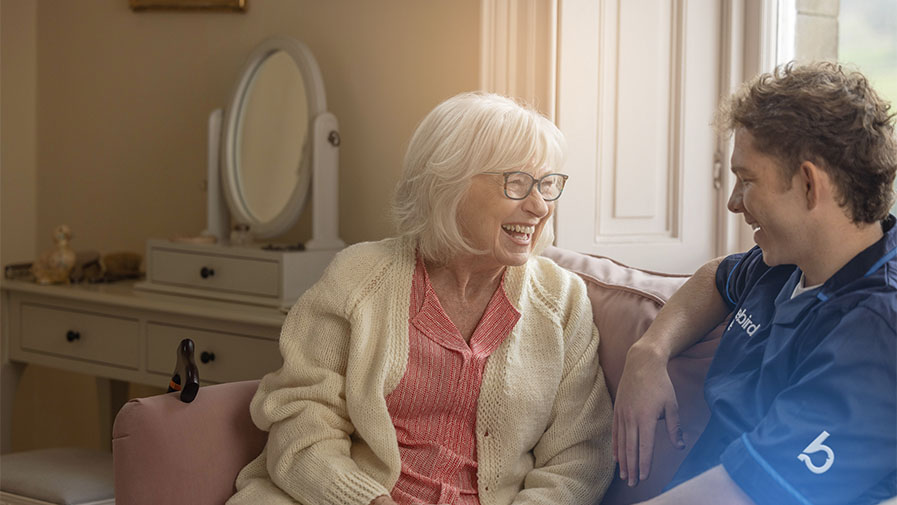
It can be found in a shared laugh, a familiar song, the pleasure of warm sunshine or the reassuring presence of someone who knows when to talk and when simply to sit nearby.
For families across Elmbridge, Runnymede & Spelthorne, this can be an important reminder. A moment does not have to be remembered tomorrow to have value today.
A good moment still matters
Perhaps you take a family member for coffee in Walton-on-Thames. They enjoy choosing a cake, recognise the music playing and smile at something the server says. By the time you arrive home, they may not remember where you have been.
That does not make the outing meaningless.
The enjoyment was real. They felt included, comfortable and connected while it was happening. That positive feeling may remain even when the details have faded.
The same is true at home. Someone might not remember helping to prepare lunch, but they may spend the afternoon feeling useful and content. They may not recall who chose the music, but an old song can still encourage them to sing, tap their feet or tell a story.
Dementia care often becomes more effective when the focus moves away from what someone can recall and towards what helps them experience a good day.
Respond to the feeling, not only the words
Someone living with dementia may occasionally describe a situation that does not match the present day. They might say they need to leave for work, collect children from school or return to a childhood home.
Correcting them may seem like the natural response. However, repeatedly being told that they are wrong can leave someone feeling embarrassed, frightened or unheard.
It can be more helpful to notice the emotion behind what they are saying.
A wish to go to work may reflect a need to feel useful. Wanting to collect children might come from a sense of responsibility. Asking to go home may express a desire for security, even when they are already in their own house.
Rather than arguing about the facts, acknowledge the feeling. Ask about the work they used to do, invite them to help with something or move to a quieter room with familiar belongings.
This is not about pretending that every detail is correct. It is about understanding what someone is trying to communicate and responding with reassurance rather than confrontation.
If there is a sudden change in mood, communication or behaviour, seek advice from a healthcare professional. Pain, infection, dehydration, tiredness or changes to medication can all affect how someone feels and responds.
Take the pressure off conversation
Conversation can become more difficult as dementia progresses. Finding a particular word may take longer, stories may be repeated and following several voices at once can feel overwhelming.
Connection does not always need a continuous conversation.
Doing something side by side can take away the pressure to remember what was said or produce the right response. You might look through a gardening magazine, arrange flowers, prepare pastry, sort a drawer or listen to a favourite piece of music.
These shared activities create natural opportunities for communication. Someone may comment on a photograph, begin singing or show you how they have always folded a tea towel. A memory might surface without being prompted or tested.
Silence can also be companionable. Sitting together with tea while watching the garden is still time spent together. Holding someone’s hand can provide reassurance when words are difficult.
The aim is not to keep someone constantly occupied. It is to discover which forms of company feel natural to them.
Protect confidence through contribution
When someone begins to find everyday tasks difficult, family members may gradually start doing everything on their behalf. This usually comes from kindness and a wish to make life easier.
However, being involved can be just as important as having a task completed.
Someone may not be able to prepare an entire Sunday lunch, but they might peel vegetables, stir a mixture or choose what will be served. They may no longer manage a full shopping trip alone, but they could help write the list or select fruit in the shop.
A lifelong gardener might enjoy deciding which flowers should be planted, even if someone else handles the heavier work. A former office worker may still take pride in sorting the post or checking items off a list.
The right support finds the point between struggling alone and having everything taken over. A Care Professional might set out what is needed, offer a quiet prompt or complete an activity alongside them.
What matters is not how quickly the job is finished. It is whether someone still feels that their experience, preferences and contribution matter.
Keep familiar places within reach
Local places can carry memories that are difficult to put into words.
It may be a favourite shop in Weybridge, a café in Esher or a familiar stretch of the river near Walton-on-Thames. Someone might enjoy a drive through Cobham, a short visit to Chertsey or choosing something for lunch in Staines-upon-Thames.
These outings do not need to fill the day. Familiarity can sometimes be enjoyed in ten or fifteen minutes.
Notice which times tend to feel most comfortable. A quiet weekday morning may be easier than a busy Saturday afternoon. Returning to the same café, using a familiar route and sitting at a preferred table can reduce the amount of new information someone needs to process.
Plans should remain flexible. If the surroundings feel too noisy or someone becomes tired, going home is not a failed outing. Recognising when enough is enough helps preserve the pleasure of going out.
Families can also explore dementia support services available across Surrey, including local centres offering activities, groups, advice and opportunities to meet other people affected by dementia.
Notice when the world feels too busy
Environments that once felt ordinary can become difficult to interpret. Several conversations, a television playing in the background and people moving around the room may create more information than someone can comfortably process.
At home, small changes can reduce that pressure.
Turning off the television during a conversation may make words easier to follow. Closing the curtains as daylight fades can reduce confusing reflections. Serving one course at a time may make a meal feel more manageable.
It can also help to notice patterns. Someone might be confident and talkative in the morning but become more uncertain later in the day. A shower may be easier after breakfast than before it. Visitors may be welcome individually but tiring in a larger group.
Rather than expecting every day to follow the same plan, support can adapt to how someone is feeling at that moment.
Help family time feel like family time
Dementia affects relationships as well as routines.
A husband may find that most conversations with his wife are now about medication, meals or appointments. A daughter might spend every visit checking cupboards and completing household jobs. A son may be so focused on keeping everything organised that there is little time left to sit with his parents.
Over time, family members can begin to feel like coordinators rather than partners, sons or daughters.
Introducing care at home across Elmbridge, Runnymede & Spelthorne can help rebalance those relationships. A Care Professional might support the morning routine, prepare a meal or accompany someone on a familiar outing.
That could give a husband the chance to rest before spending the afternoon with his wife. It might allow a daughter to arrive with photographs rather than a list of jobs. A son could watch football with his father without spending half the match worrying about what still needs to be done.
Support does not replace the role of family. At its best, it gives families more opportunity to enjoy being together.
What good dementia care can make possible
Good dementia care is built through trust and familiarity.
It means knowing that someone prefers tea in a particular mug and does not like being hurried in the morning. It means recognising when conversation is welcome and when quiet company would feel better. It means understanding which songs make them smile, which subjects cause worry and which activities restore a sense of purpose.
These details allow care to feel personal rather than procedural.
At Bluebird Care Elmbridge, Runnymede & Spelthorne, our dementia care at home is shaped around the individual’s personality, routines, communication and history. Our Care Professionals take time to build a relationship so that support can become a familiar and reassuring part of everyday life.
Dementia can bring uncertainty, but it does not remove someone’s ability to experience affection, humour, pride, comfort or joy. With thoughtful support in place, there can still be familiar outings, shared meals, personal choices and moments that feel unmistakably like them.
To discuss what dementia care could look like for you or a family member, call Bluebird Care Elmbridge, Runnymede & Spelthorne on 01932 567 593 or send an online enquiry to arrange a free, no-obligation care assessment.