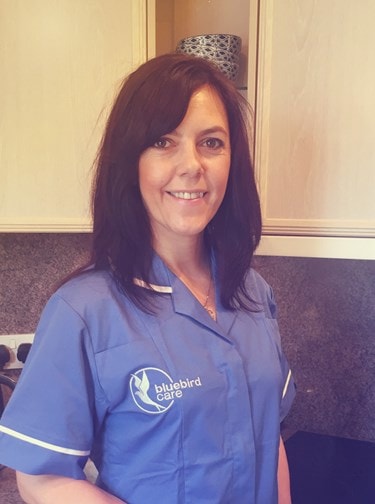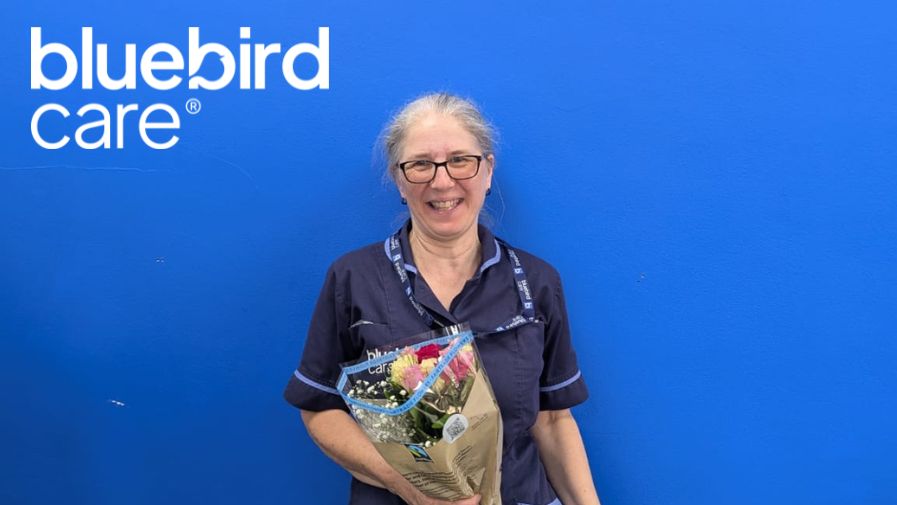
This is an amazing achievement for Anthea and one that we are extremely proud to recognise. It also reflects our ongoing commitment to developing our care team and ensuring that the people we support receive the highest possible standard of dementia care.
Going above and beyond in Dementia Care
Dementia care is at the heart of what we do. All of our carers receive training in dementia care as part of our core training programme, ensuring that every member of our team has an understanding of dementia and the impact it can have on individuals and their families.
Anthea’s Level 3 qualification is an additional level of learning, giving her the opportunity to develop her knowledge and understanding even further.
We are committed to Bluebird Care being a leading name in dementia care and by investing in the knowledge, skills and confidence of our carers, we can continue to improve the experience of the people we support.
Understanding communication beyond words
One of the most valuable aspects of the course for Anthea was developing a deeper understanding of how people living with dementia communicate, particularly when they may not be able to express their needs through words.
Anthea explained:
While I was learning I believe I was changing the way I was communicating, getting better responses and understanding the reasons why my clients were responding back in a negative or positive way.
She also found it particularly useful to explore how behaviour, emotions and body language can provide important clues about what a person may be experiencing.
As Anthea recognised through her training, behaviour is rarely simply “random”. Changes in behaviour can be a person's way of communicating an unmet need or responding to their own reality.
For example, someone who becomes quieter or withdrawn may be experiencing difficulties with their eyesight or hearing, depression, fatigue or overstimulation. Similarly, behaviours such as anger, shouting, swearing, making threats or physical actions may occur when a person feels threatened, confused or physically unwell.
Understanding this can help carers look beyond the behaviour itself and ask the important question: “What is this person trying to communicate to me?”
Developing person-centred care
Anthea’s course has also expanded her knowledge of the effects dementia can have on different areas of the brain, medicines commonly used in dementia care and their potential side effects, and the importance of administering medication in a person-centred way.
The course also explored diversity and inclusion, helping Anthea to further develop the tools and understanding needed to adapt care to the individual and the stage of their dementia journey.
For Anthea, this learning will help her continue to provide care that is tailored to the person rather than simply focusing on their diagnosis.
“This will help me improve the way I care for people with dementia.”
That individual approach is fundamental to good dementia care. There is no single approach that works for everyone. Every person is different, with their own history, preferences, communication style, abilities and needs.
Anthea’s advice to other carers
When asked what she would pass on to other carers, Anthea highlighted something particularly important: getting to know the individual.
She explained that every person a carer visits can be different, meaning that carers need to adapt their approach and learn how each person communicates.
Her advice is simple but valuable: read and understand the person’s care plan, MAR chart, relevant care notes, procedures and policies, and pay attention to possible medication side effects and changes in behaviour.
This combination of knowledge, observation and genuine understanding can make a significant difference to the quality of care a person receives.
Investing in our care team
We believe that excellent care starts with excellent training.
The expert Bluebird Care Training Academy plays an important role in ensuring that Bluebird carers have opportunities to continually develop their knowledge and skills. Anthea’s achievement is a fantastic example of how additional training can deepen understanding and directly influence the way care is delivered.
We would like to congratulate Anthea on achieving her Level 3 Award in Awareness of Dementia and thank her for her continued commitment to learning and to the people she supports.