

World Alzheimer’s Month takes place every September, with World Alzheimer’s Day marked on 21 September. It gives us an opportunity to listen more closely to people living with dementia and the families supporting them.
Across Clapham, Streatham and Lambeth, dementia is experienced in everyday moments. A familiar journey may feel uncertain. Finding the right word may take longer. A simple choice can suddenly feel difficult.
Helpful support begins with the individual, not the diagnosis. Understanding what makes someone smile, what helps them feel calm, how they communicate and which parts of the day matter most can make life feel more familiar and manageable.
Begin with what makes someone feel like themselves
Dementia may change what someone can manage, but it does not remove their personality, preferences or need to feel understood.
Take time to learn the details that matter. Someone may always have listened to the radio over breakfast, enjoyed choosing their own clothes or preferred quiet company to constant conversation. They may feel most relaxed while gardening, looking at family photographs or walking somewhere they know well.
An activity may need to become shorter or better supported, but its meaning can remain. Preparing a whole meal might no longer feel comfortable, while washing vegetables or stirring a familiar recipe still provides a sense of involvement. These details transform care from completing tasks into building genuine trust.
Look for the need behind the moment
Behaviour is often a way of communicating. If someone repeatedly asks to go home, refuses help with getting dressed or becomes unsettled at a particular time, pause before trying to correct or persuade them.
They may be tired, uncomfortable, overwhelmed by noise or worried about losing control. “Home” may represent a place or time when they felt safe. Resistance to a shower may come from feeling cold, exposed or rushed.
Responding to the feeling can be more reassuring than challenging the facts. A quieter room, a warm towel, a familiar song or the chance to try again later may change the moment. Brief notes can help families spot patterns too. A sudden or unusual change should be discussed with a healthcare professional, as illness, pain or medication may be contributing.
Protect choice and make conversation easier
Choice supports dignity, but broad questions can be difficult to process. “What would you like to do today?” requires someone to recall possibilities, compare them and explain a decision. Two clear choices, such as tea or coffee, or sitting in the garden or listening to music, can make participation easier.
Show the choices where helpful and allow time for an answer. If someone changes their mind, flexibility is often more valuable than completing the original plan.
Conversation also needs space. Reduce background noise, keep sentences clear and introduce one idea at a time. If a story is repeated or a harmless detail is mistaken, it may not need correcting. Listen for the feeling beneath the words. Worry about getting to work may reflect a wish to feel useful; asking for a parent may express a need for comfort.
Shared activity can make communication feel natural. Looking through a magazine, preparing vegetables or listening to music removes the pressure to keep talking and allows connection to develop at its own pace.
Let familiar surroundings support the day
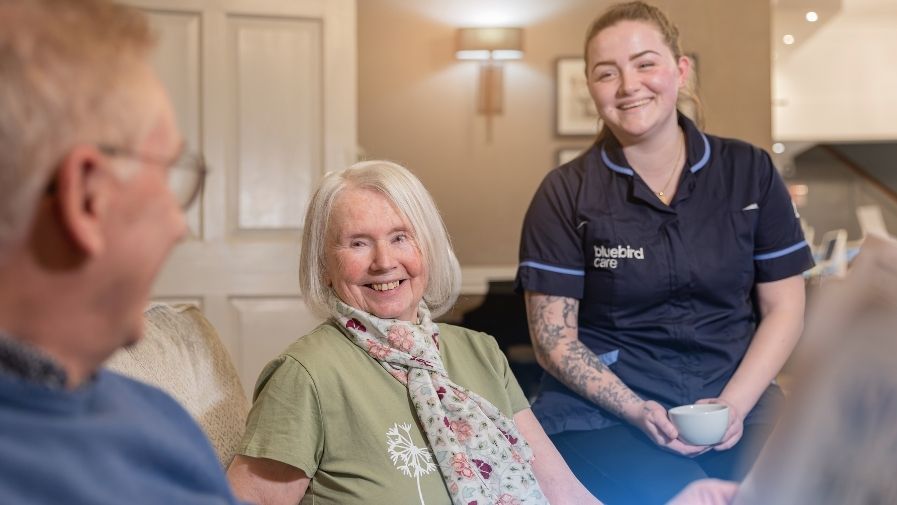
Home contains its own reassuring cues: a favourite cup, photographs on the mantelpiece, the chair beside the window and the sound of a familiar clock. Keeping these details in place can provide continuity.
Small changes may make daily life easier. Better lighting can reduce confusing shadows. Clear contrast between a plate and the table can make food easier to see. Keeping the kettle, tea and mugs together may help someone continue making their usual drink.
Avoid changing too much at once. A house filled with notices can create more information to process, while moving familiar furniture may cause confusion. Address the specific difficulty and make the smallest useful adjustment.
It also helps to notice when someone has the most energy. Washing, appointments or a trip to the shops may feel more comfortable in the morning, while music or a quiet household task may suit later in the day. A familiar rhythm can be reassuring, but it should always leave room for a slower start or a change of plan.
Keep familiar parts of Lambeth within reach
Staying connected to the local area can protect confidence and identity. That might mean sitting on a usual bench on Clapham Common, taking a gentle walk near Streatham Common or visiting a café where the surroundings and faces feel familiar.
Busy roads, crowded pavements and unexpected changes can make London tiring. Choosing a quieter time, following a known route and having an easy way home can help. The outing does not need to be ambitious. Ten enjoyable minutes outside may mean more than a longer trip that leaves someone distressed.
For people who find ordinary public transport difficult because of disability or mobility needs, our guide to Dial-a-Ride in Lambeth explains the door-to-door service and how eligible residents can apply. Families can also explore our local services and community partnerships, including Age UK Lambeth and Alzheimer’s Society.
Make room for family to feel like family
Support often grows gradually. A partner starts managing meals and medication. An adult child takes on appointments and household jobs. Another relative fills the gaps when work and family commitments allow.
Over time, visits can become centred on what needs doing next. A daughter arrives and goes straight to the laundry. A husband spends the afternoon organising rather than sitting with his wife. An adult child leaves feeling that they completed every task but barely spent time with their parent.
The right support can change that balance. A Care Professional might help with personal care, prepare lunch or accompany someone on a familiar walk. This could allow a partner to catch up on sleep, attend a medical appointment or enjoy an uninterrupted cup of tea. It could give an adult child the freedom to visit as a son or daughter again.
Accepting help does not lessen the importance of family care. It can protect those relationships and make the overall arrangement more sustainable. Bluebird Care Clapham & Streatham is proud to work in partnership with Alzheimer’s Society. You can read more about our shared approach to supporting people living with dementia.
What the right care can make possible
Good dementia care is not measured only by completed tasks. It can be seen in someone choosing their own clothes, enjoying lunch without feeling rushed or looking forward to a walk with a Care Professional they know and trust.
It can also be felt across the family. A partner has time to rest. A daughter can share tea without checking every cupboard. A son leaves after a visit remembering the conversation rather than the list of jobs.
At Bluebird Care Clapham & Streatham, our dementia and Alzheimer’s care at home is built around the person: their history, routines, communication and the things that help them feel comfortable. With the right relationship in place, support can feel less like somebody taking over and more like everyday life becoming possible again.
Get in touch
To discuss what care could look like for you or a family member, call Bluebird Care Clapham & Streatham on 0208 677 6665 or send an online enquiry to arrange a free, no-obligation consultation.