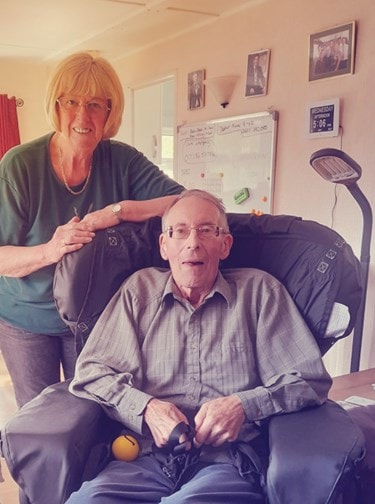
An Alternative to a Care Home in Camden & Hampstead
Care homes aren't the only choice
When someone begins needing more support, moving into a care home may seem like the obvious next step. But it is not the only option.
With the right care in place, you or your loved one may be able to remain at home while receiving the practical and personal support needed each day.
Bluebird Care provides alternatives to residential care across Camden, Hampstead and surrounding neighbourhoods, including King’s Cross, Somers Town and Primrose Hill. From regular home care visits to live-in and night care, support can be built around the customer and the life they want to continue living.
Do you have to move into a care home?
Not necessarily.
A move into residential care may be right for some people, but others would strongly prefer to remain at home if their needs can be safely supported there.
This can become particularly important when someone has lived in the same home for many years. Their surroundings may hold memories, possessions and routines that give everyday life a sense of familiarity.
Staying at home can also mean continuing to:
- Live with a partner
- Keep a much-loved pet
- See friends and relatives in familiar surroundings
- Choose when to eat, sleep and get up
- Maintain hobbies and interests
- Remain connected to the local community
Care can then be fitted around that life rather than asking the customer to leave it behind.
When could care at home be an alternative?
Families often start considering residential care because the amount of support needed has increased.
Perhaps a loved one is finding personal care difficult, needs more help moving safely around the home or is no longer managing meals and medication alone.
For others, the issue is that relatives are providing more care than they can realistically sustain.
Depending on the circumstances, care at home may be worth exploring when:
- Regular visiting care is no longer enough
- Someone needs support at several points throughout the day
- Overnight assistance has become necessary
- A family carer can no longer provide all the help required
- A couple wants to continue living together
- Familiar surroundings are particularly reassuring
- The customer wants one-to-one support without moving home
Our Camden & Hampstead team can discuss the whole picture before exploring which type of care may be suitable.
Keeping the choices that make home feel like home
One of the biggest differences between care at home and residential care is the ability to preserve an individual household routine.
There is no communal timetable determining when everyone eats or goes to bed.
If the customer likes breakfast late in the morning, enjoys watching a particular programme every evening or wants family to drop in as they always have, care can work around those preferences.
The same applies to smaller details.
Someone can continue using their own kitchen, sleeping in their own bed and spending time in the rooms where they feel most comfortable.
These everyday choices can become especially valuable when other parts of life are changing.
What could an alternative to residential care include?
There is no single care arrangement that suits everyone.
Depending on the customer’s needs, support may include:
- Visiting home care: Scheduled visits for personal care, meals, medication support, household tasks and companionship.
- Live-in care: A care expert lives in the customer’s home and provides agreed one-to-one support throughout their working day.
- Night care: Sleeping or waking night support where assistance or reassurance is needed overnight.
- Personal care: Respectful help with bathing, dressing, grooming, toileting and everyday routines.
- Meals and household help: Practical assistance with cooking, shopping, laundry and keeping the home comfortable.
- Companionship: Conversation, shared activities and support maintaining social connections.
- Support for couples: Care planned around both partners so they can continue sharing their home.
- Condition-specific support: Personalised help where illness, disability or changing health creates more complex needs.
Different forms of care can also work together where appropriate.
One-to-one support around one person
At home, care can be centred directly around the customer receiving it.
Their preferences determine how agreed support is provided, rather than their routine needing to fit around several other residents.
That might mean taking more time over personal care, preparing a favourite meal or planning the day around when the customer tends to have the most energy.
It also leaves room for independence.
Having significant care needs does not mean every task has to be taken over. Where someone can and wants to continue doing something themselves, the care expert can support that choice.
Staying together as a couple
The possibility of residential care can be particularly difficult when partners have shared a home for many years.
If one person develops greater care needs, the couple may worry that they will eventually have to live apart or that their relationship will become dominated by caring responsibilities.
Support at home can offer another possibility.
A personalised arrangement can take account of both partners, providing assistance where it is needed while allowing them to continue sharing familiar routines and everyday life together.
It can also relieve some of the practical pressure if one partner has become the other’s main carer.
Keeping pets, people and familiar surroundings close
A home is more than a building.
For many customers, it includes a pet curled up in a favourite spot, neighbours they recognise and memories attached to particular rooms.
Moving away can mean adjusting to all of those changes at once.
Care at home allows these familiar parts of life to remain in place.
Friends and relatives can continue visiting in the usual way, while the customer can remain connected to places and people throughout Camden and Hampstead that already form part of their life.
What happens if care needs increase?
Choosing care at home does not mean the original arrangement has to remain fixed.
Someone may begin with visiting care and later need longer visits, overnight assistance or live-in support.
Our Camden & Hampstead team can review the care provided as circumstances change and discuss whether a different level of support would be more appropriate.
This flexibility can help families plan ahead without assuming that increasing care needs automatically mean an immediate move into residential care.
Exploring an alternative to a care home in Camden & Hampstead
If you are beginning to wonder whether a loved one can continue living at home, you do not have to make the decision alone.
Our Camden & Hampstead team can talk through what is becoming difficult, how much support is currently needed and what the customer wants their future to look like.
Bluebird Care provides care at home throughout Camden and Hampstead, including King’s Cross, Somers Town and Primrose Hill.
Call Bluebird Care Camden & Hampstead on 0207 449 0557 for a friendly, no-obligation conversation about alternatives to residential care.
See care services in Camden & Hampstead
East Midlands
East of England
Greater London
North East
North West
Northern Ireland
Scotland
South East
South West
Wales
West Midlands
Yorkshire and the Humber
East Midlands
East of England
Greater London
North East
North West
Northern Ireland
Scotland
South East
South West
Wales
West Midlands
Yorkshire and the Humber
An Alternative to a Care Home in Camden & Hampstead stories
We have helped thousands of people feel like themselves
Hear how Bluebird Care has empowered customers across the UK to live life on their terms.