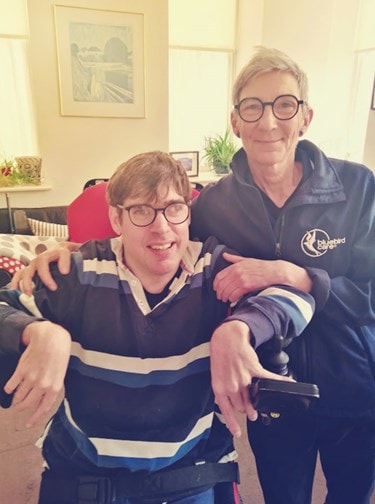
Acquired Brain Injury Care in Camden & Hampstead
Expert care for acquired brain injury. In the comfort of home
Life can look very different after an acquired brain injury. Familiar tasks may take more concentration, communication can change and someone who was previously very independent may need to find new ways of managing everyday life.
Bluebird Care provides acquired brain injury care across Camden, Hampstead and surrounding neighbourhoods, including King’s Cross, Somers Town and Bloomsbury. Our care experts provide personalised support at home, helping customers build confidence, maintain independence and work towards the goals that matter to them.
Support can complement professional rehabilitation while helping new skills and strategies become part of everyday life.
What is an acquired brain injury?
An acquired brain injury, or ABI, is damage to the brain that happens after birth.
It can have several causes, including:
- A road traffic accident or fall
- A stroke
- A brain tumour
- An infection
- A haemorrhage
- Another illness or medical event affecting the brain
The effects depend on the area and severity of the injury and can vary considerably from one person to another.
Someone may experience changes in:
- Memory and concentration
- Speech or communication
- Mobility and coordination
- Mood or emotional control
- Problem-solving
- Fatigue
- Confidence
- Everyday independence
That individuality is important. Care should reflect the person’s particular strengths and challenges rather than treating every brain injury in the same way.
Adjusting to a different everyday life
An acquired brain injury can mean learning how to approach familiar tasks differently.
Someone who previously cooked without thinking may now need to break the activity into smaller steps. Another person may find busy surroundings overwhelming or need more time to process information during a conversation.
These changes can be frustrating, particularly when the customer remembers how easily they managed before.
Having patient support at home can provide space to adapt at a pace that feels manageable.
A care expert can work alongside the customer rather than automatically taking over, helping them stay involved in daily life wherever possible.
What can acquired brain injury care include?
Care is shaped around the effects of the injury and the customer’s individual goals.
This may include:
- Personal care: Respectful help with washing, dressing, grooming and other personal routines while encouraging participation.
- Daily structure: Support creating routines that make activities easier to remember and manage.
- Memory prompts: Practical reminders for appointments, meals and other agreed parts of the day.
- Meals: Help shopping for groceries, preparing food and maintaining regular eating and drinking routines.
- Medication support: Assistance with agreed medication and prescription routines.
- Household tasks: Help with cleaning, laundry and practical responsibilities that have become more difficult.
- Community activities: Support getting out, seeing friends and maintaining hobbies or interests.
- Companionship: Patient conversation, reassurance and emotional support during periods of adjustment.
The level of assistance can change as abilities, confidence and goals develop.
Supporting rehabilitation in real life
Rehabilitation often involves working with professionals such as physiotherapists, occupational therapists or speech and language therapists.
Home care does not replace this specialist support.
Instead, a care expert can help the customer follow agreed strategies as part of ordinary daily routines.
For example, an occupational therapist may recommend a particular approach to completing a household task. Using that approach regularly at home can help it become more familiar.
This connects rehabilitation with the places and activities that form part of the customer’s actual life.
Finding structure without taking away choice
Changes in memory, concentration or planning can make an unstructured day harder to navigate.
Some customers may benefit from predictable routines, reminders or breaking activities into clear stages.
However, structure should still leave room for choice.
The customer might decide what they want for lunch, when they would like to go out or which task they want to work on that day.
A care expert can provide the prompts and organisation that make those decisions easier to act on without turning the customer’s day into a rigid timetable.
Rebuilding confidence outside the home
Returning to community life can be an important part of recovery.
After a brain injury, someone may feel less confident travelling, attending appointments or returning to activities they once enjoyed.
A care expert can provide practical support as those experiences gradually become more manageable.
That might mean accompanying the customer on a walk, helping them visit friends or providing reassurance during an outing.
For some people, longer term goals may include returning to education, volunteering or employment. Care can support those ambitions where appropriate alongside the wider professional team.
Making space for rest and managing fatigue
Fatigue after an acquired brain injury can be significant and is not always obvious to other people.
Activities that once took little thought may now require considerable physical or mental effort.
Support with household tasks, shopping or meals can help the customer save energy for rehabilitation, relationships and activities that matter more to them.
It can also be useful to plan demanding parts of the day around periods when the customer typically feels more alert.
The aim is to make daily life achievable without unnecessarily limiting what the person does.
Supporting families through change
Brain injury can affect relationships as well as practical routines.
Relatives may be adjusting to changes in communication, behaviour, memory or the amount of support their loved one needs.
A care expert can share some of the everyday responsibilities while providing consistency for the customer.
This can give relatives more room to spend time together as family rather than every interaction becoming focused on supervision, appointments or practical care.
Care that develops alongside the customer
Recovery after an acquired brain injury does not follow a fixed path.
Some abilities may improve, new strategies may become easier and the amount of support required can change over time.
Our Camden & Hampstead team can review the care arrangement as this happens.
Support can step back when the customer becomes more independent or adapt if a particular area of life continues to require assistance.
Getting started with acquired brain injury care in Camden & Hampstead
If you or a loved one is adjusting to life after an acquired brain injury, our Camden & Hampstead team can help you explore what support at home could look like.
We will take the time to understand how the injury affects everyday life, what the customer already manages and which personal or rehabilitation goals they would like support with.
Bluebird Care provides acquired brain injury care throughout Camden and Hampstead, including King’s Cross, Somers Town and Bloomsbury.
Call Bluebird Care Camden & Hampstead on 0207 449 0557 for a friendly, no-obligation conversation about acquired brain injury care.
Make an enquiry
See care services in Camden & Hampstead
East Midlands
East of England
Greater London
North East
North West
Northern Ireland
Scotland
South East
South West
Wales
West Midlands
Yorkshire and the Humber
East Midlands
East of England
Greater London
North East
North West
Northern Ireland
Scotland
South East
South West
Wales
West Midlands
Yorkshire and the Humber
Acquired Brain Injury Care in Camden & Hampstead stories
We have helped thousands of people feel like themselves
Hear how Bluebird Care has empowered customers across the UK to live life on their terms.