
Blog: Winter wellbeing for older adults in Birmingham
Staying safe, warm and comfortable this winter
Tips for caring for the ones you love during the cold spells
Winter in Birmingham brings colder temperatures, shorter days and a higher risk of illness or falls, especially for older adults. With thoughtful preparation and the right help though, winter can be a season of comfort and confidence for older adults.
This guide is designed for families and older residents across Birmingham who want to take simple, effective steps to look after their wellbeing over the winter months. It explains common challenges, offers practical tips, and shows how home care can provide reassurance without being intrusive.
Click here to learn more about home care in Birmingham and how it can support winter wellbeing
Why winter wellbeing matters for the elderly
For many older adults, winter can be a time of increased vulnerability. Cold weather can make existing health conditions worse, raise the risk of respiratory infections and affect mobility. Icy pavements and reduced daylight increase the likelihood of trips or falls. Heating costs are often a concern, leading some people to reduce home temperatures to below comfortable levels.
Families commonly ask the same questions: is my relative warm enough, are they eating well, and do they have someone checking in regularly? Planning early and putting simple measures in place helps reduce risks and supports independence. Winter wellbeing is not only about staying warm. It is also about maintaining routines
keeping active, eating well, staying connected and ensuring that help is available when it is needed.
.jpg?language=en "Winter Wellbeing Blog Image")
Common winter challenges for older adults
Cold homes and heating confidence
Some older adults worry about energy costs and may hesitate to use heating as much as they need. Rooms can fall below recommended temperatures, and draughts or poor insulation make it harder to stay comfortable.
Higher risk of illness
Respiratory infections such as coughs and colds are more common in winter. Conditions like arthritis can feel worse in cold weather, and managing medication schedules can become more challenging during disrupted routines.
Falls and mobility concerns
Low light, wet leaves and icy surfaces increase fall risk outdoors. Indoors, colder rooms can affect joint stiffness, and multiple layers of clothing can change balance. Footwear choices also play a role in stability and confidence.
Isolation and low mood
Shorter days and difficult weather can reduce social contact. Loneliness can increase anxiety and affect appetite, sleep and overall motivation. Regular contact, even brief, helps keep spirits up.
Practical tips for staying warm and safe at home
Aim for consistent room temperatures
Keep living areas warm enough throughout the day. If possible, set the thermostat to maintain a steady temperature. Use draught excluders, thermal curtains and door seals to reduce heat loss. A well warmed room is safer and more comfortable than intermittent bursts of heat.
Layer clothing wisely
Light layers trap warmth more effectively than a single heavy item. Choose breathable fabrics close to the skin and add wool or fleece layers on top. Wear socks with good grip and slippers with firm soles to improve stability.
Use blankets and warm bedding
A blanket over the lap helps retain heat while sitting, and a hot water bottle or microwavable heat pack can provide comfort. In bed, consider flannel sheets and an extra layer to maintain warmth through the night.
Check for trip hazards
Remove loose rugs, tidy trailing cables and keep frequently used pathways clear. Ensure lighting is adequate in hallways, stairs and bathrooms. Motion activated night lights can help someone navigate safely after dark.
Keep regular routines
Structure the day around familiar times for meals, medication, activity and rest. Routines reduce stress and help ensure essential tasks are completed. If someone enjoys a morning brew and a light walk, keep these habits within safe limits.
Nutrition and hydration in cold weather
Warm, nourishing meals
Soups, stews and casseroles are ideal for winter. They can be prepared in batches, stored safely and reheated as needed. Include protein such as chicken, fish, beans or lentils, and add vegetables for vitamins and fibre.
Hydration matters
People often drink less water in winter. Encourage regular warm drinks like tea, herbal infusions or hot water with a slice of lemon. Adequate hydration supports energy, brain function and temperature regulation.
Easy snacks and meal planning
Keep simple options on hand: yoghurt, fruit, wholegrain crackers, cheese or nut butter. Plan a weekly menu and shop ahead to avoid last minute decisions, which can lead to missed meals or poor choices.
Medication and nutrition
Some medicines should be taken with food or at specific times. A pill organiser and a visible daily schedule help maintain adherence. If appetite is low, smaller, more frequent meals can be easier to manage.
Keeping simple, nutritious options nearby helps you stay on track without any fuss
-copy.jpg?language=en "Health & Wellbeing Blog image 2")
Staying active and preventing falls
Gentle movement throughout the day
Short, regular activity helps maintain strength and balance. Seated exercises, light stretches and simple routines like standing heel raises can be done safely at home. If someone has prescribed exercises, keep them visible and easy to follow.
Safe footwear and mobility aids
Choose shoes with sturdy soles and good grip. Check walking sticks, frames or handrails regularly to ensure they are secure and in good condition. Indoors, non- slip socks can add stability.
Outdoor safety
If going out, pick the brightest part of the day and use well lit, familiar routes. Wear a warm coat, gloves and a hat, and consider a walking aid for confidence. If conditions are icy, reschedule non essential trips and prioritise indoor activity.
Mental wellbeing and staying connected
Regular contact with family and friends
Set up a simple check in routine. A phone call each morning or a brief visit a few times a week can make a big difference. For those comfortable with technology, video calls offer extra reassurance.
Hobbies and interests
Encourage activities that bring pleasure. Reading, puzzles, music, crafts or watching a favourite programme keep the mind engaged. Small goals, such as completing a daily crossword, provide structure and satisfaction.
Community and social groups
Local groups often run winter programmes, including coffee mornings, gentle exercise, or support sessions. Attending even occasionally helps reduce isolation and boosts mood.
How home care can help without being intrusive
Home care is most useful when it fits around someone’s life rather than replacing it. A light touch approach can provide reassurance without taking away independence.
Practical support
Short visits can help with warming the home, preparing meals, checking medication, and ensuring the environment is safe. Carers can look for any changes in health or mood and share updates with families.
Flexible routines
Support can increase during cold snaps or after illness, then step down as the person regains confidence. The aim is always to keep routines familiar and encourage independence.
Companionship and wellbeing
A friendly conversation, making a hot drink together, or supporting a short walk can lift spirits. Carers can suggest small, achievable activities that fit the person’s interests.
Click here If you would like to read more about home care options in Birmingham
Local considerations for Birmingham
Weather awareness
Winter in Birmingham can be unpredictable, with cold spells, rain and occasional ice. Keeping an eye on local forecasts helps families plan travel, shopping and outdoor activities safely.
Access to essentials
Plan grocery deliveries or coordinate family support during severe weather. Stock cupboards with staples, and ensure prescriptions are ordered on time to avoid gaps.
Transport and appointments
Allow extra time for travel, especially when conditions are poor. If public transport is affected, consider rescheduling non urgent appointments or arranging support to attend safely.
A case in point
Mr H, aged 82, lives alone in a terraced house in Birmingham. He enjoys his independence and has a good routine, but last winter he felt anxious during cold spells. His daughter arranged short home care visits for three weeks after he had a chest infection. Carers checked the heating was set correctly, prepared warm lunches, and administered his medication. They also helped with gentle exercises to rebuild his strength. Within a fortnight, Mr H was back to his usual morning walk and felt confident managing at home. The family appreciated the reassurance that he was safe and well at home.
Frequently asked questions
How warm should the home be during winter?
Aim for a consistent, comfortable temperature in living spaces. Avoid letting rooms become very cold and then trying to heat them quickly, as this is less effective and can feel uncomfortable.
What Simple Steps Reduce Fall Risk Outdoors?
Choose footwear with good grip and non-slip soles, plan outings during daylight, and avoid icy or leaf-covered paths. Use walking aids with rubber tips for extra stability and allow extra time to move safely.
How can I encourage better eating and hydration?
Plan warm, easy meals and keep nutritious snacks available. Offer hot drinks regularly and use a visible routine to prompt meals and drinks throughout the day.
Can home care be short term during winter?
Yes. Many families arrange short term support during a recovery period or cold snap. Visits can be increased or reduced flexibly, depending on need.
What signs suggest someone needs more help?
Look for changes in appetite, mood, sleep, mobility or medication adherence. If the home feels colder than usual or the person seems withdrawn, a gentle check in and practical support can help.
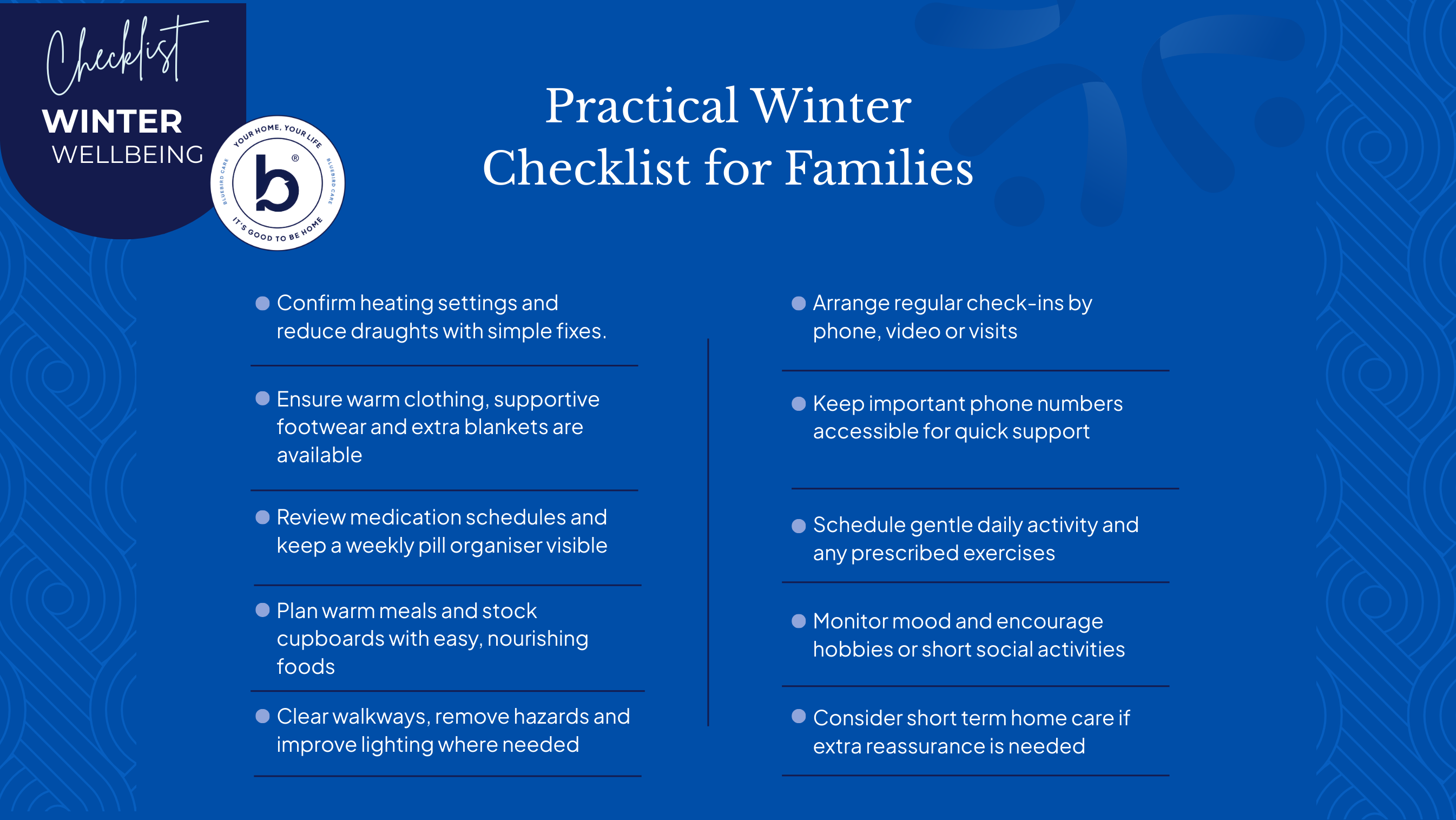
A practical winter checklist for families
Keeping the cold at bay: a final thought
Winter wellbeing does not have to be complicated. With steady warmth at home, nourishing food, gentle activity and regular contact, older adults in Birmingham can stay safe, comfortable and confident throughout the colder months.
Families can support loved ones by planning early, keeping routines in place and calling on flexible help when needed.
Home care, delivered in a way that respects independence, offers practical support and peace of mind without feeling intrusive.